
Images courtesy of John Ford
As many bird species are more easily seen or heard compared to other animals, changes over time in the bird community at Leadburn have perhaps been the best documented.
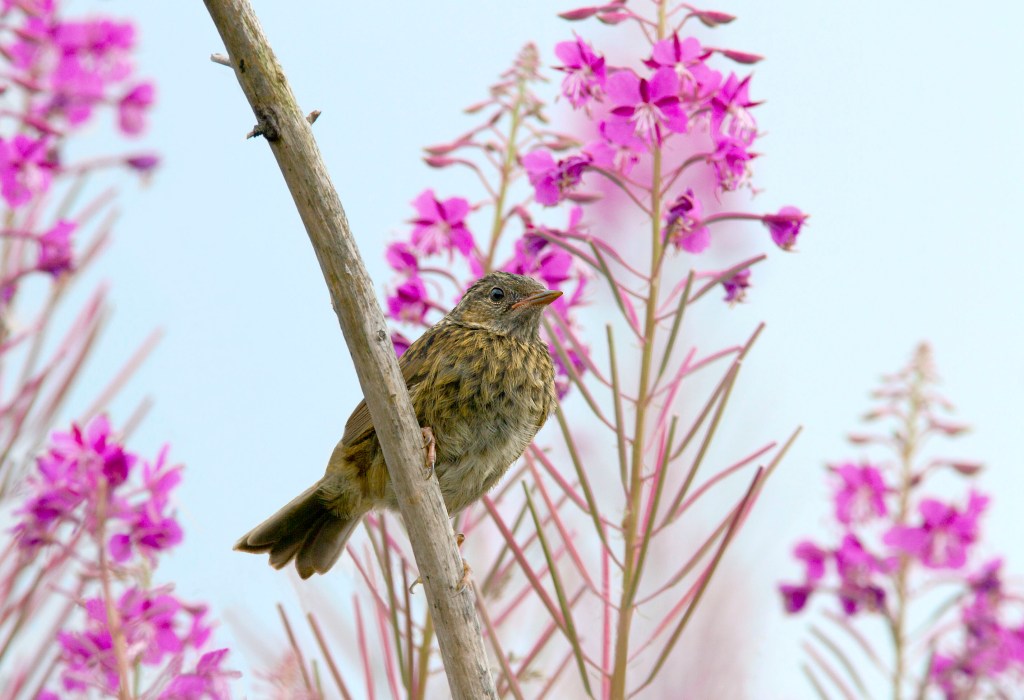
Although bird communities in the remaining areas of mature forestry have probably remained similar since 2001, bird communities on the original cleared forestry ground have increased markedly. Although little systematic recording has been done, single bird counts on the clear-felled areas were carried out in May 2007 and 2008 when bare ground was still frequent on young heathery areas and conifer regeneration was still young (up to 8 years) and relatively sparse. Some self-seeded young birch was establishing here and there, but planting of native tree saplings was only just beginning. In 2007 and 2008 about 10 meadow pipit territories were recorded, 5-6 willow warblers, 8 wrens, 3 each of dunnocks, robins and chaffinches, and a few skylarks and reed buntings. Other visits then showed single stonechat and sedge warbler territories, redpolls and various thrushes and tits.
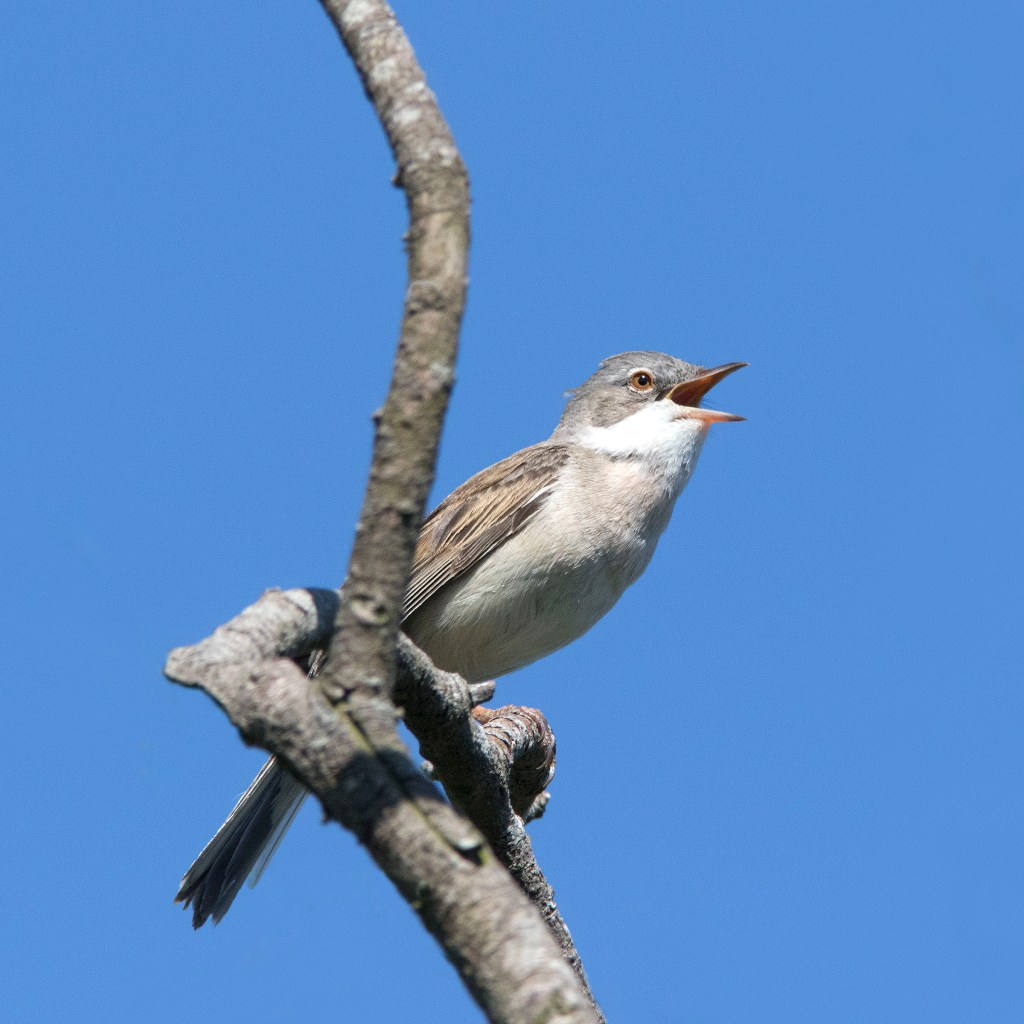
Since then, numbers and variety of songbirds seem to have increased year on year. In 2020 numbers appeared especially high. Willow warblers are now the dominant species with 50-100 territories across all areas with any trees or scrub. Up to 15 pairs of whitethroats are found in overgrown areas mainly along the railway lines, with up to eight pairs of sedge warblers in damper areas. At least two blackcap and chiffchaff territories are found in the mature conifers at either end of the main track and a garden warbler has sang in new young woodland in several recent summers. Grasshopper warblers reel in several locations, but no more than two on the same day so the actual number of territories depends on how much they move and whether they stop singing once mated.
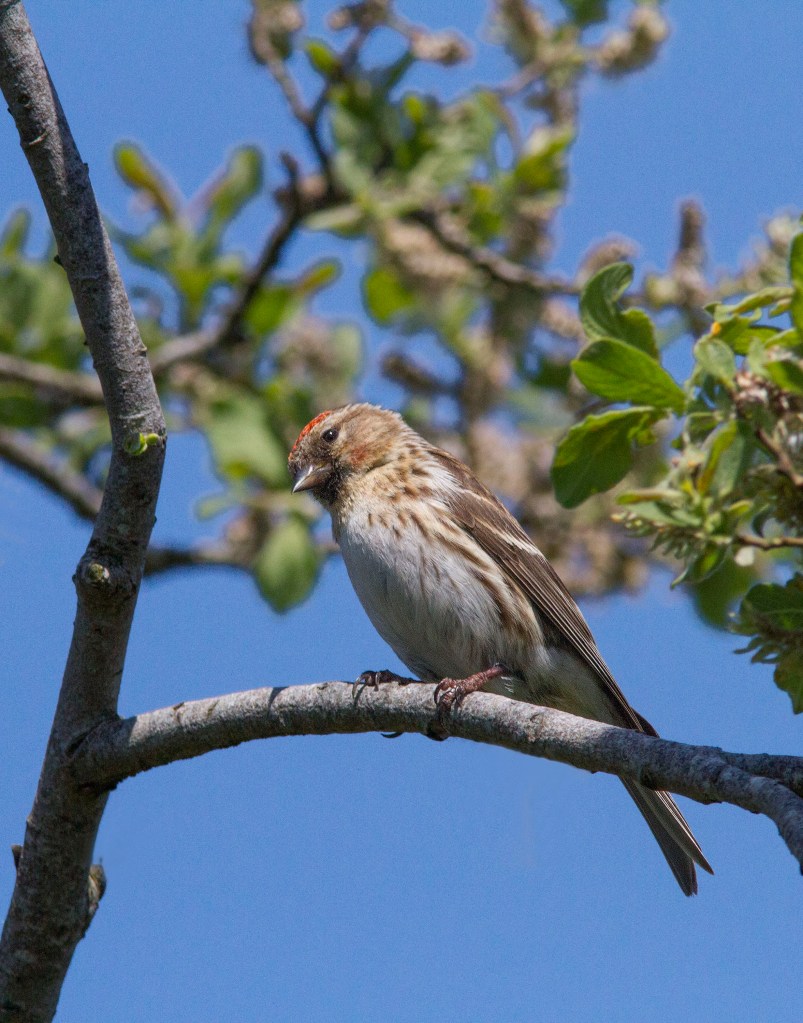
Other common woodland songbirds have increased too and although counts are lacking, redpolls, robins, chaffinches and wrens are not. Several pairs each of song thrushes, mistle thrushes and blackbirds breed. Family groups of long-tailed tits and bullfinches remain to winter, sometimes numbering 20 or more. Goldcrests, treecreepers and 1-2 spotted flycatcher territories may be more typical of the mature conifers than the new trees, but tree pipits are now regular spring and autumn flyover migrants that sometimes stop and feed. Two or more great spotted woodpecker territories are centred in the mature conifers, but the birds often feed in the new younger trees. Green woodpeckers were seen for a few years in young trees along the road, attracted to standing dead wood and stumps. They have not been seen recently. Crossbills regularly use the mature conifers in small numbers, as do greenfinches, but sometimes larger groups of up to 15 crossbills feed or are seen flying over (33 in groups in late June 2020). Siskins and goldfinches are regular with several pairs probably breeding, but linnets seem to fly over without stopping. Magpies breed and regular sightings of two jays in recent years in summer and autumn suggest that these are breeding too. Cuckoos have been recorded several times in recent spring and summers, and a nuthatch in mid September may precede colonisation. Flocks of up to 300 fieldfares and 30 redwings rest in our trees in autumn and spring whilst feeding on nearby fields, but flocks of up to 20 mistle thrushes may be the main plunderers of our rowan berries. A solitary brambling was regular in recent winters on and under beech trees near the layby, but further small flocks were seen in winter 21/22.
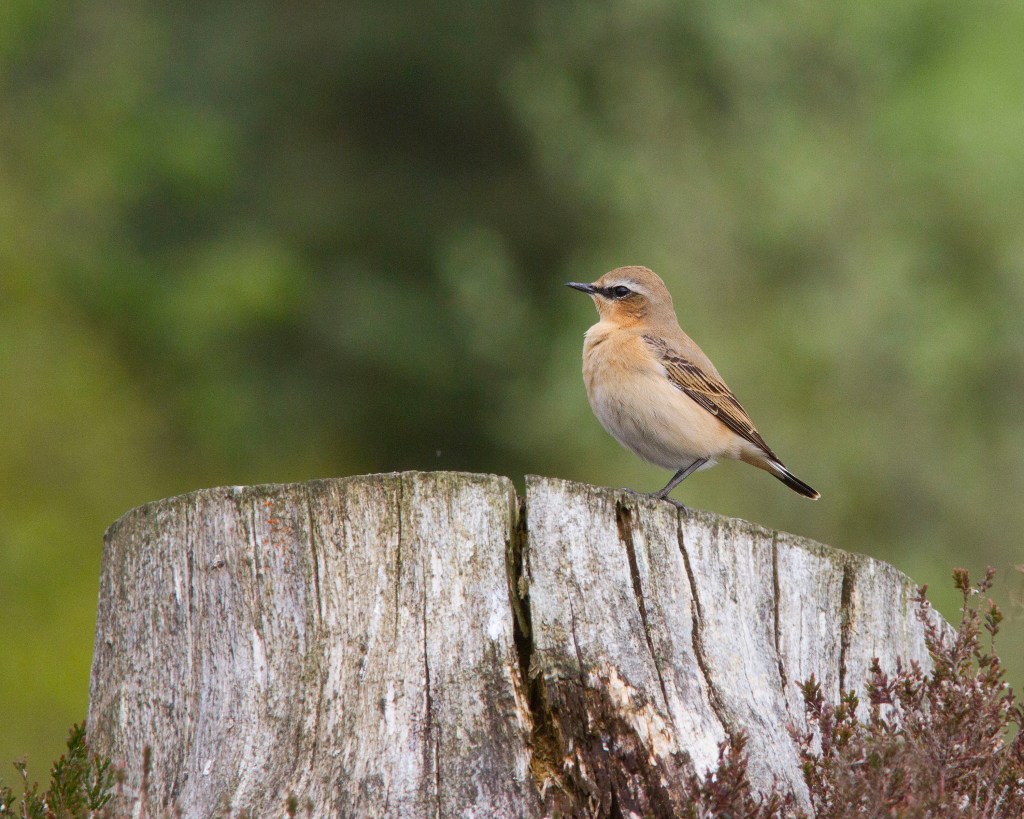
Open ground songbirds such as meadow pipits and skylarks are still present, alongside stonechats (3-5 pairs in recent summers) and reed buntings (about five territories). Pied wagtails breed and up to five grey wagtails use the pools on the new clearfell in autumn. A pair of swallows also breed, whilst house martins and sand martins pass over, swifts rarely. Three wheatears passed through together in late April 2020, often sitting on the roof of the ruined building.
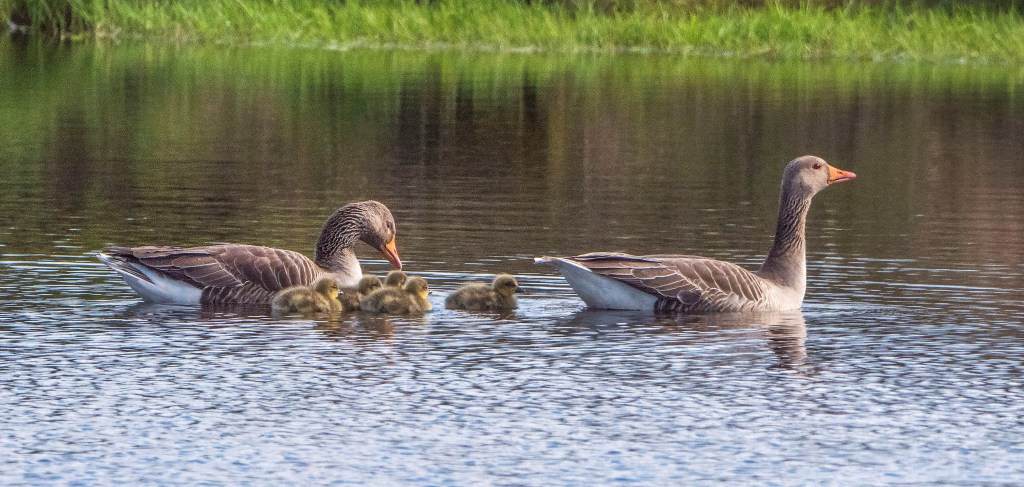
Different waterbirds use our new pools throughout the year. In winter 20 or more teal call from the quieter areas. In 2020 a female was flushed from 10 eggs on 12th April, which hatched in early May. Although a maximum of five adult mallards were seen on the pools, at least three broods were taken there in 2020. A pair of shelducks wheezed over the pools and may have tried to breed nearby. Up to five pairs of greylag geese gave territorial honks in 2020, and counts nearby have exceeded 40 birds in 2022. At least one pair nests on our pools, with 6 goslings fledged in 2021. A pair of Canada geese have honked across the woodland several times in recent springs and may breed on neighbouring pools. Swans are infrequent. Grey herons occasionally use the pools, perhaps attracted by toads, and may be breeding nearby. A little grebe whinnied from Craigburn Pond in April 2022.
Curlews nest in small numbers on the neighbouring farmland and wet heath, but have also gathered in large feeding flocks (up to 95) on neighbouring fields in recent springs. Lapwings and oystercatchers also nest in small numbers on the neighbouring fields, but have also taken immediately to the newly clearfelled Restoration Bog (4 lapwing pairs and one pair of oystercatchers in 2022). Snipe have displayed in the wet fens along our border and on the neighbouring ground in recent years. As a wintering species up to 15 could be flushed ten years ago, but only singles recently until they too have begun to use Restoration Bog in groups of up to five. Golden plovers can occasionally be heard over in spring and summer, including a group of 19 in spring 2022. It would be nice to know whether these are local breeders or migrants. Solitary woodcocks are regularly flushed from quiet sheltered places in winter. Perhaps five or more birds use Leadburn until moved on by hard frost or snow.
Single pairs of kestrel, sparrowhawk and buzzard are regular breeders. Tight flying groups of starlings or gulls occasionally alert us to hunting peregrines, one memorably chasing a terrified woodpigeon steeply down into our birches. Barn owls are seen several times each year, but may be present regularly, breeding occasionally. Tawny and long-eared owls have been seen, and may be present more often than we record. The latter bred successfully in 2021. Ravens are also seen frequently, singly or in pairs and occasionally in groups of up to eight, but seem to disappear in summer.
 LeadburnWood