
Images courtesy of John Ford
The ponds that we created have proved to be excellent for dragonflies and damselflies, and shallow run-off pools on the clearfells are attractive too. This bodes well as dragonflies and damselflies are good indicators of water quality. Five species of damselfly and four species of dragonfly are common at Leadburn and known to be breeding.
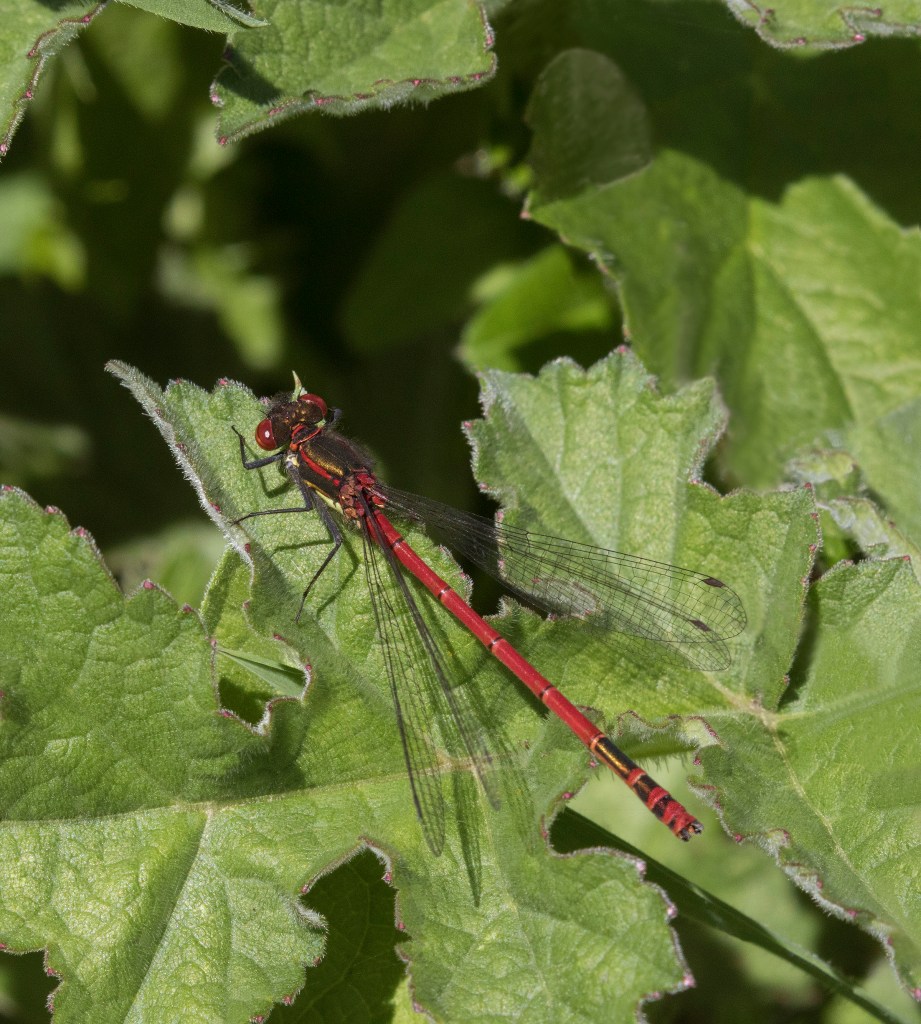
The large red damselfly, one of the spring species, is seen on warm days from early May on the small pools, around the ponds and often on pathside plants away from water. It’s the most robust of the damselflies but still delicate and can be seen all summer.
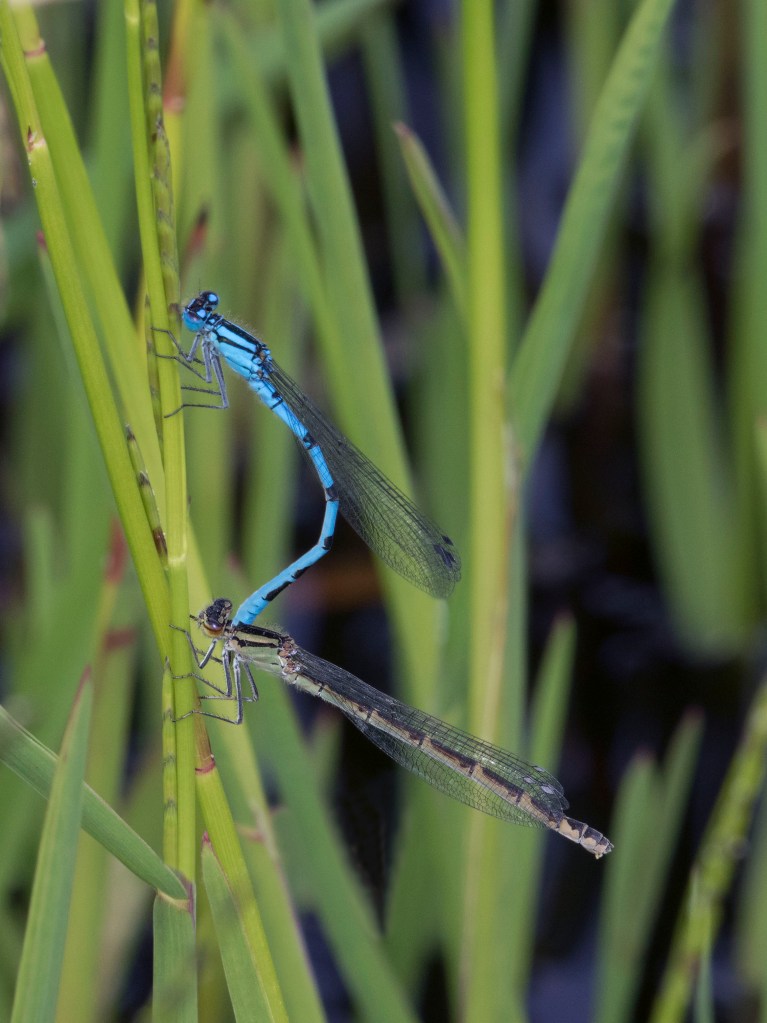
Next to emerge are the two blue damselflies, the blue-tailed with its bright blue ring at the end of the black abdomen, and the common blue – bright blue with black rings with the female duller and blacker. They will be easy to spot at the edges of the ponds and ditches throughout the summer, when the sun shines, and there just might be an azure damselfly among them – much like the common blue but for the detail of the black markings.
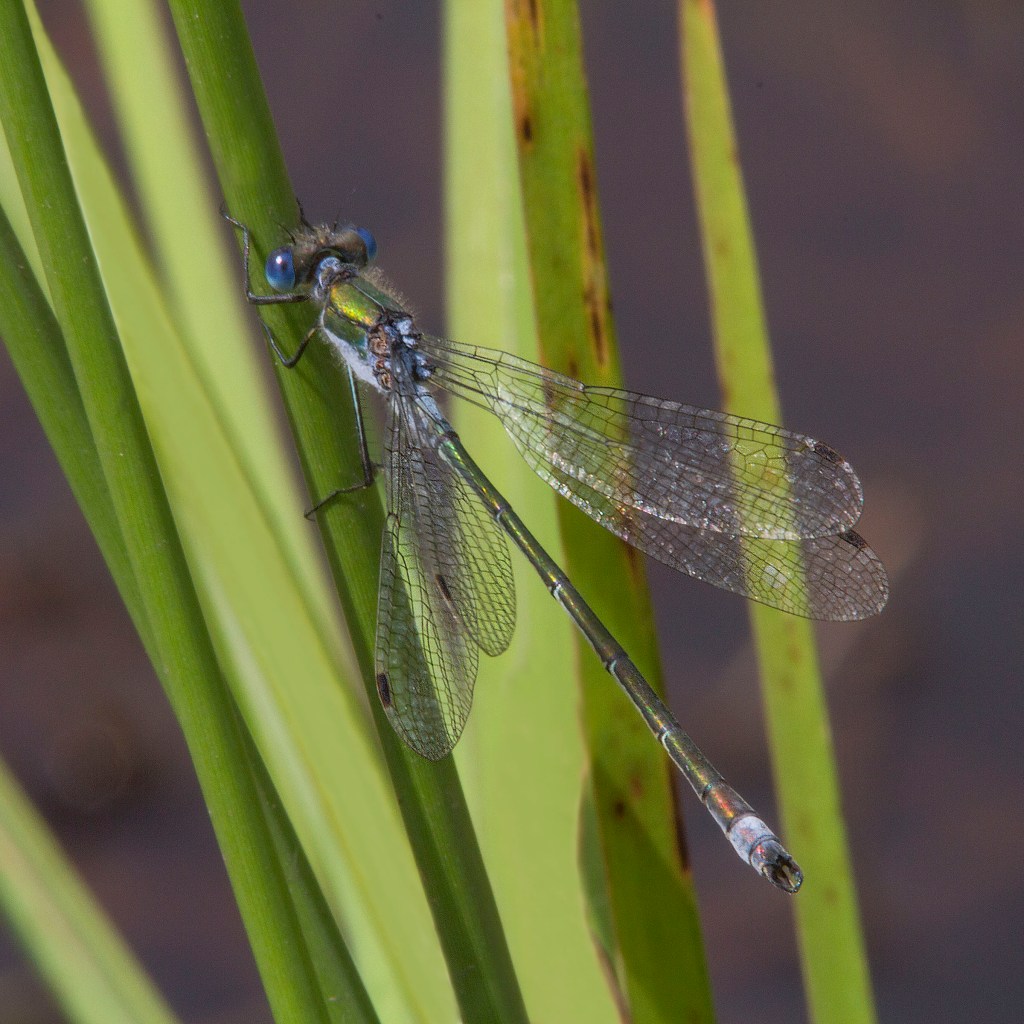
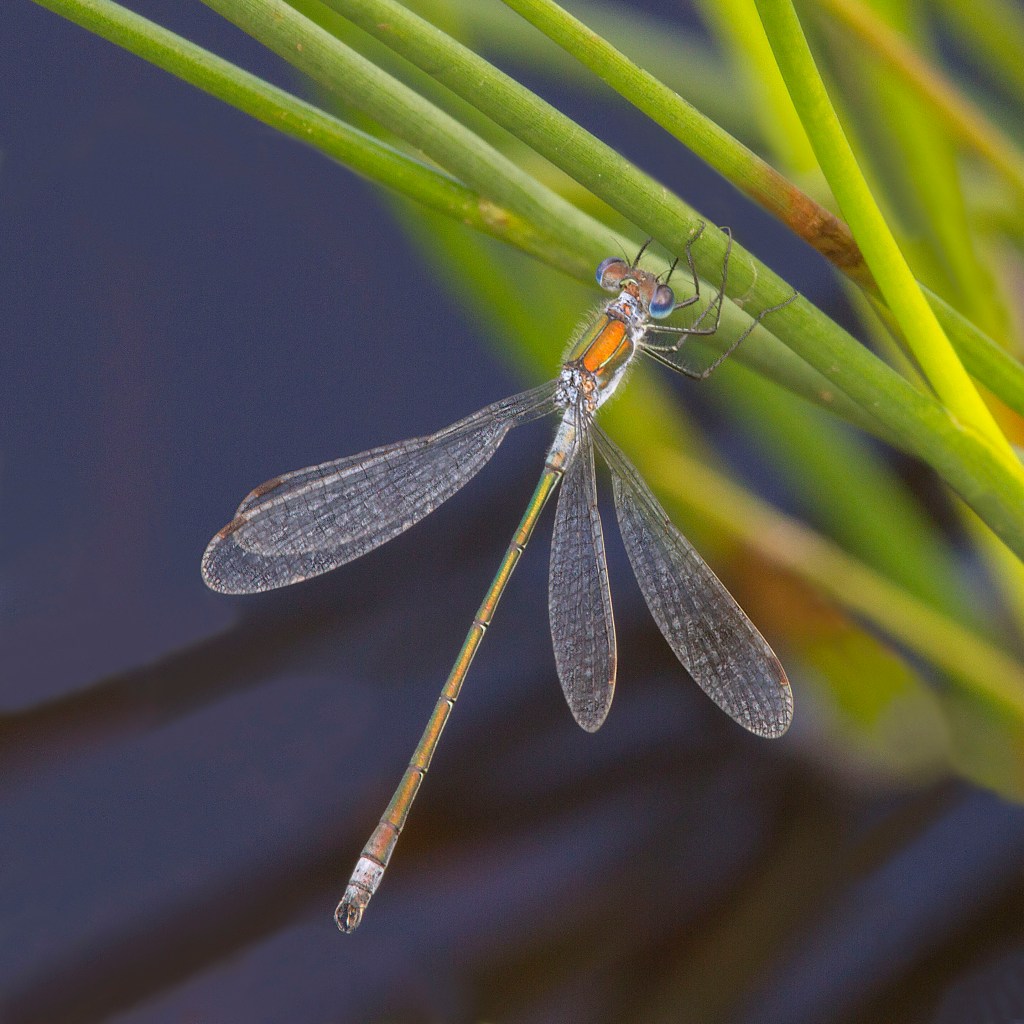
Joining them in July is the emerald damselfly, also with a blue tail but much greener and more subtle. The emeralds will be the most abundant damselfly on the pond edge reeds in August. In August 2021 a banded demoiselle was seen, still rare in Scotland but unmistakable with its shining emerald colouration and its fluttering dark blobs on the four wings.
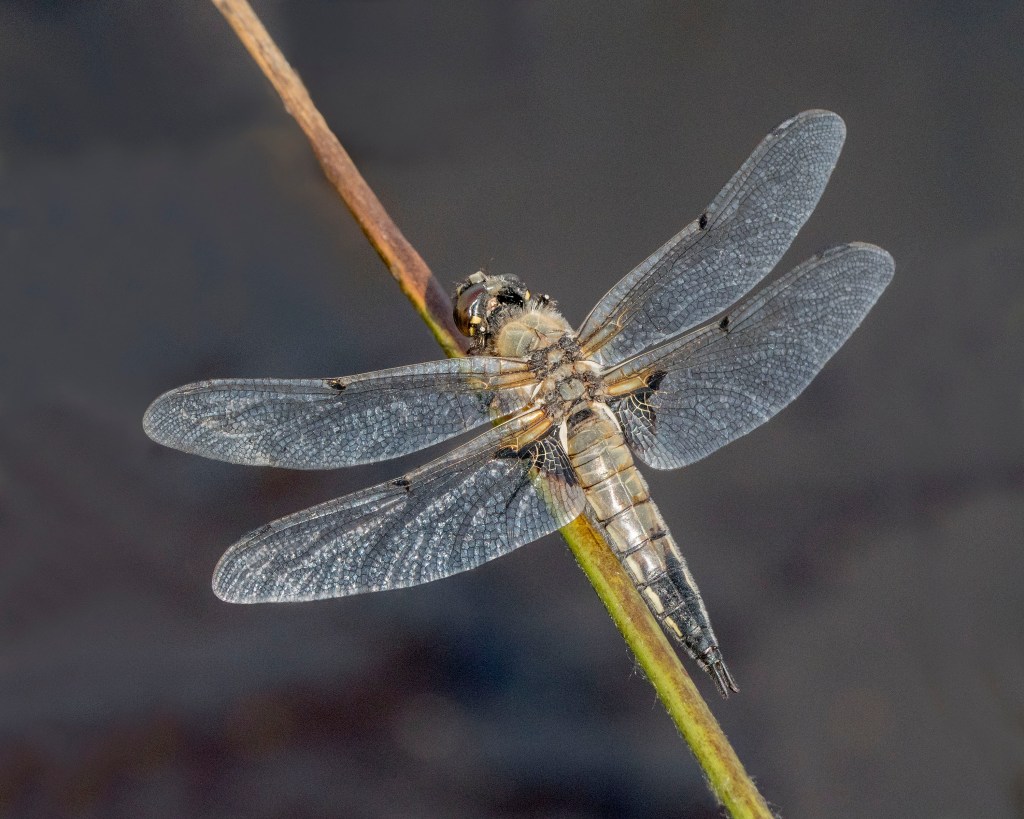
At the beginning of June the dragonflies start to emerge. Four-spotted chasers with dark wing spots are first.
Then the slimmer common darter and, later, black darters are around in good numbers through summer till autumn. Every black darter has a black triangle on the top of the thorax regardless of age or sex although the male is black so the triangle will not be obvious. Common hawkers, big, bright and superb flyers, can be seen on all the ponds and the surrounding damp heathland from August. The blue and yellow marked male can be seen lifting the yellow-spotted female in the air to mate, often hanging on to her for some time even while she lays her eggs. Watch at the muddy edges of Craigburn Pond to see her dipping her abdomen into the water to lay.
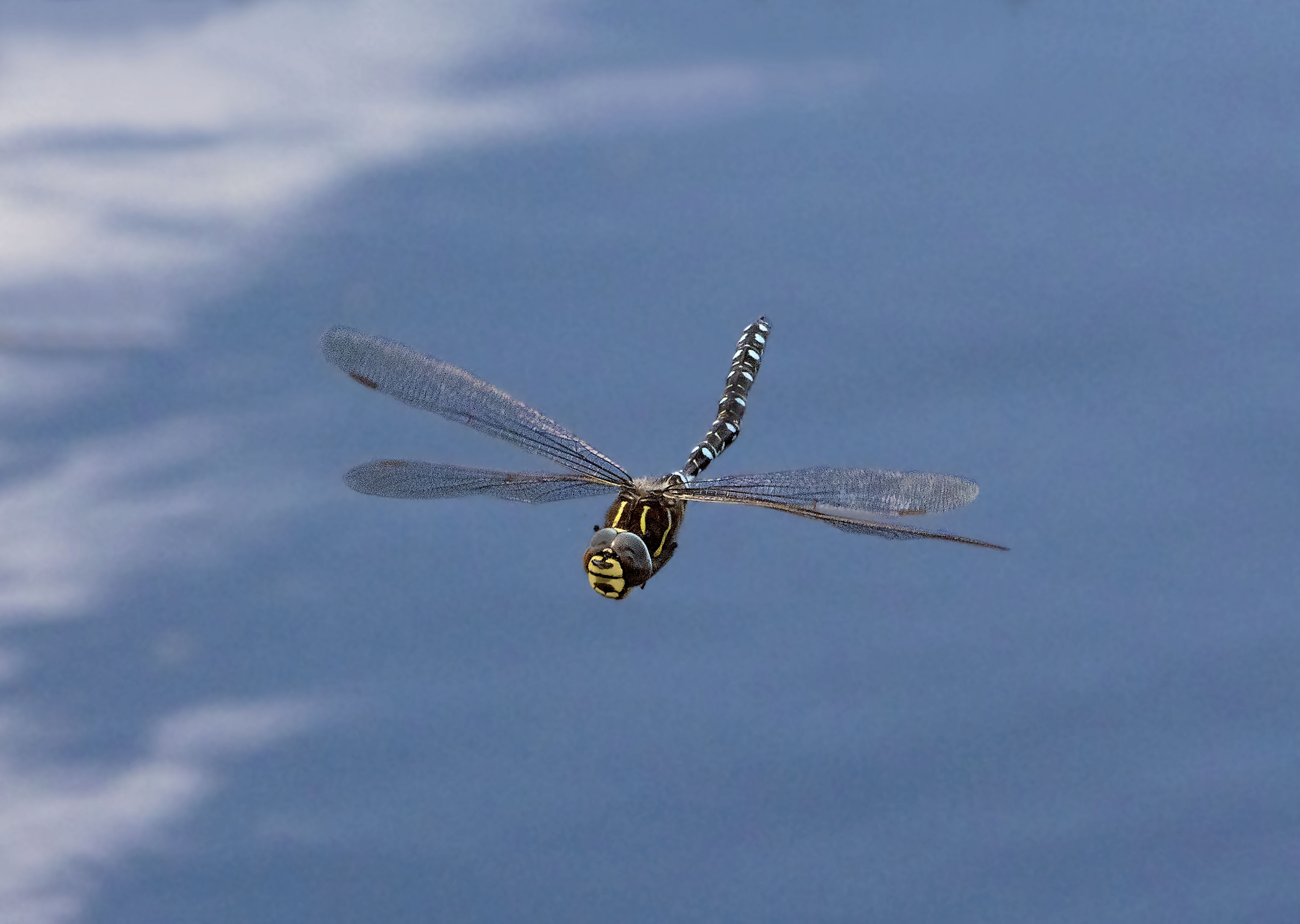
Future possibilities might include broad-bodied chasers which are moving north into Scotland, golden-ringed dragonfly and azure hawker. But all these insects are superb flyers and some are renowned for their mobility and long migrations, so you never know what might drop in!
 LeadburnWood