
Images courtesy of John Ford
As winter recedes small clumps of snowdrops appear along Leadburn Way, but the next flower to appear in any number towards the end of March is coltsfoot. This pretty dandelion-like flower gives a late showing, reflecting Leadburn’s relatively high altitude.

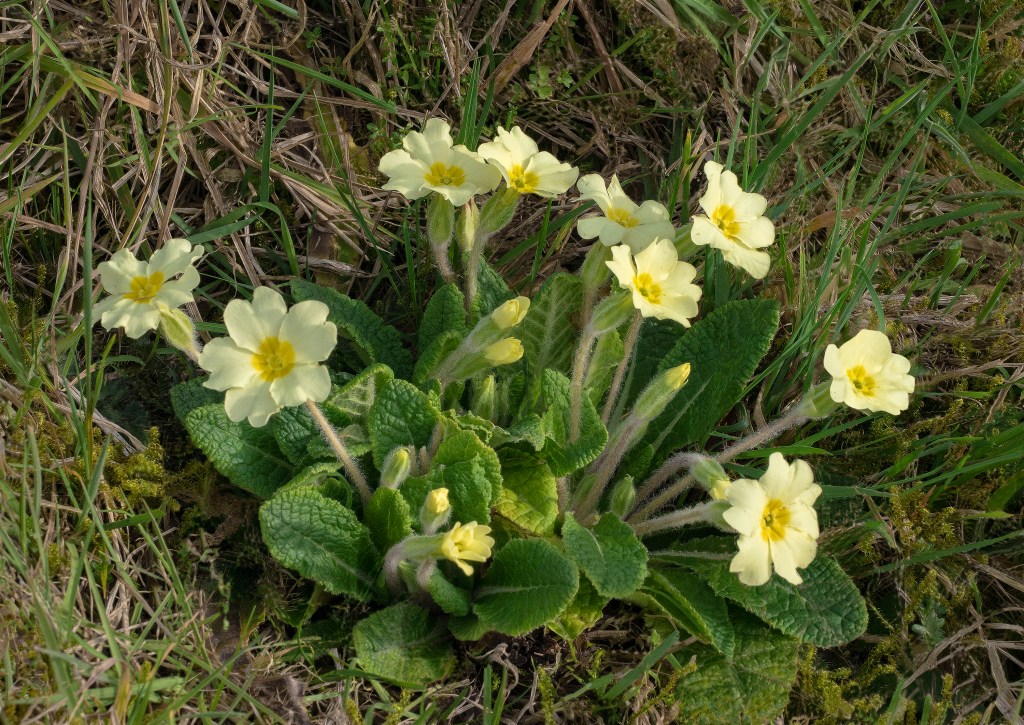
Primroses appear in April but are limited to two sites, one in the Pentland Viewpoint and the other can be seen from the Dolphinton Way close to the Pump House looking across to the Craigburn Pond.
A clump of lungwort grows on Leadburn Way. All these early flowers, together with male pollen laden catkins of the various willow species, provide a valuable food source for a variety of emerging insects, including the first bumblebees.

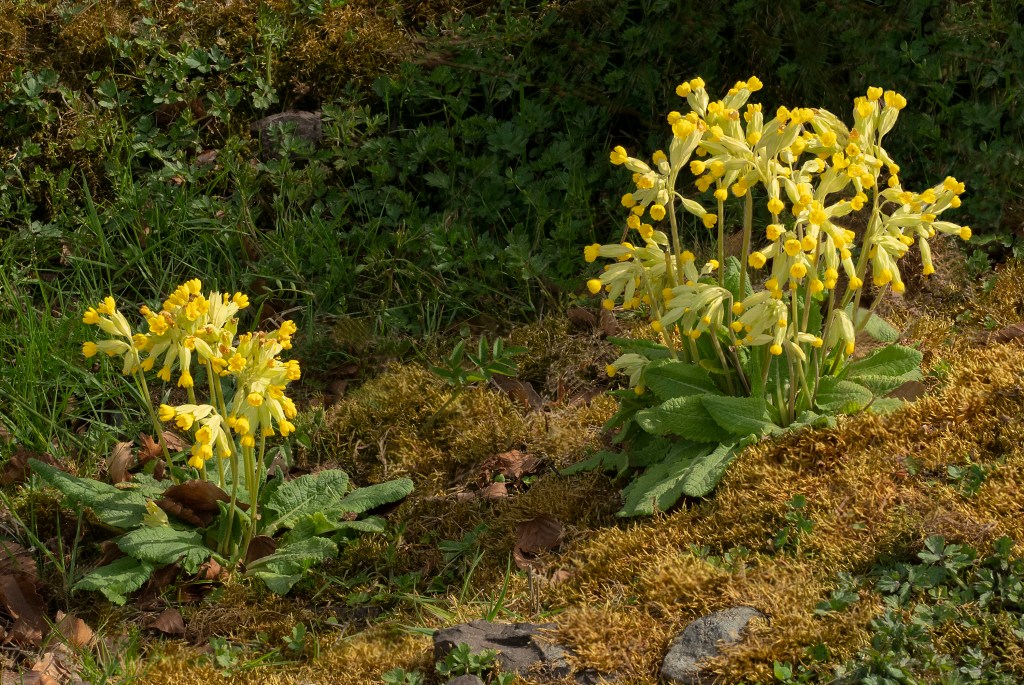
From early May common dog-violets are found quite widely, singly or in small groups. As the month progresses cowslips appear near the layby and along Easterdeans Way.
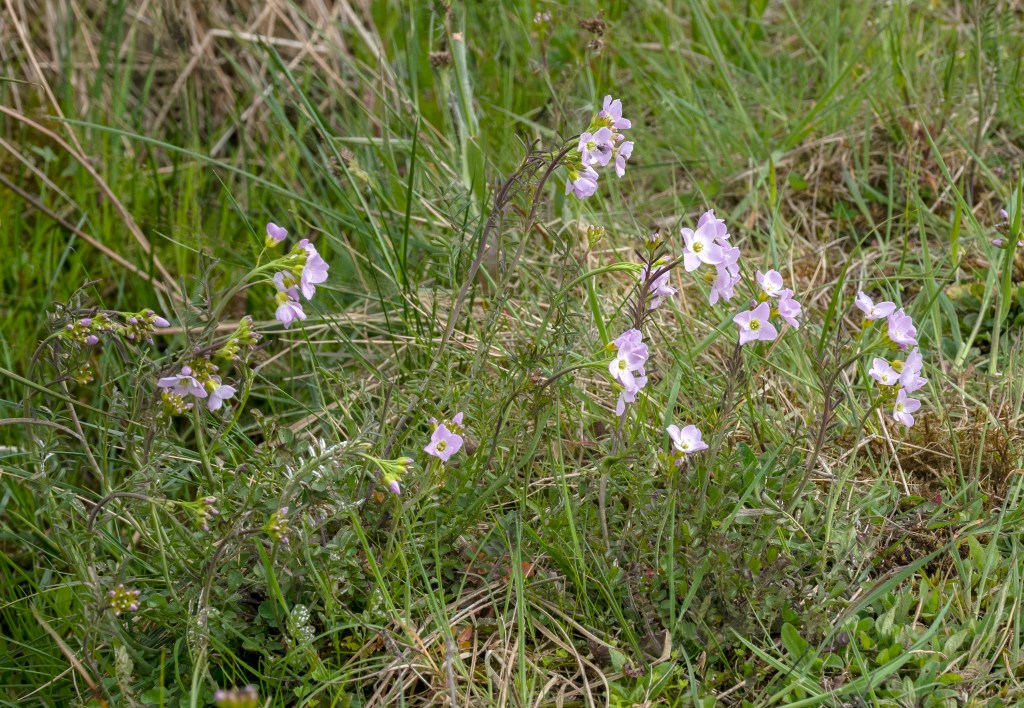
Also, cuckoo flowers along damp margins of paths, heralding the appearance of orange tip butterflies which feed on them.
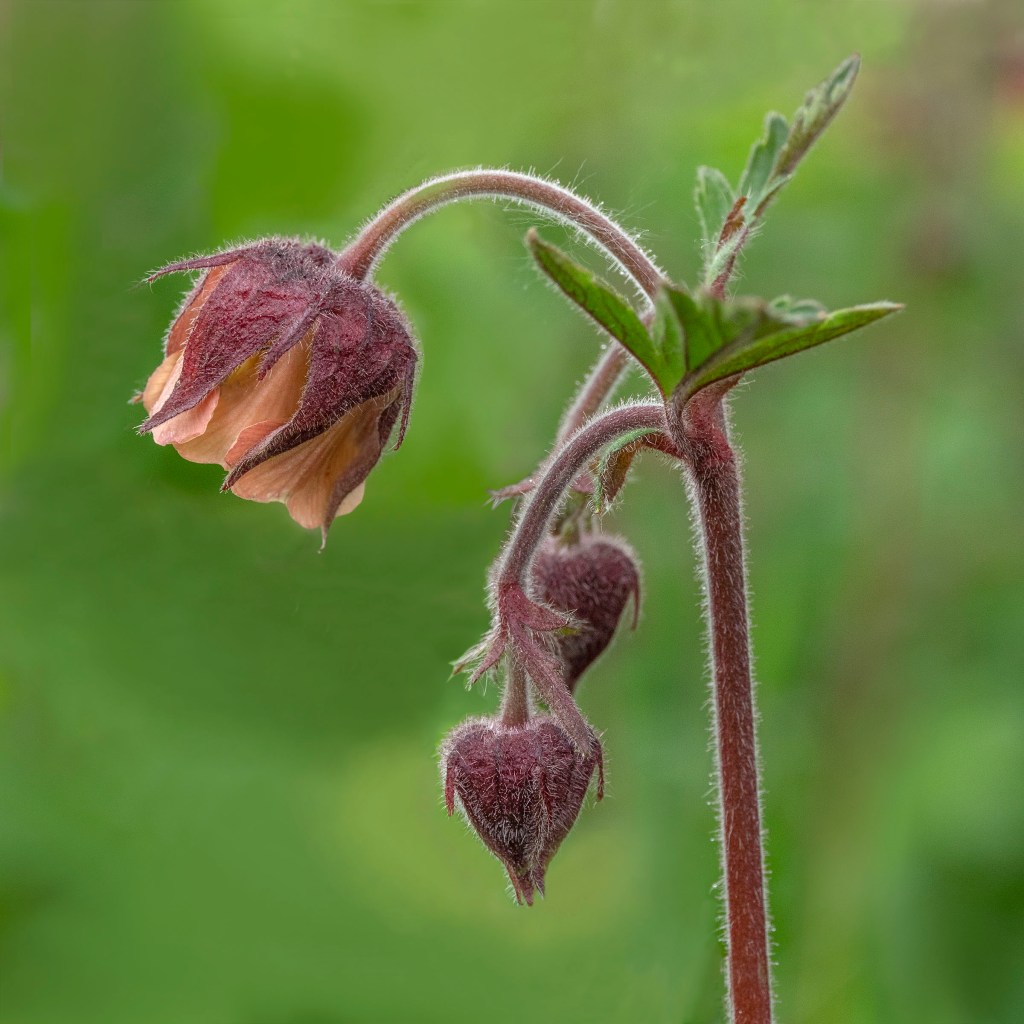
Later water avens occur, especially either side of the first part of Easterdeans Way before the crossing.
Blackthorn is found along the main road, whilst marsh marigolds are widespread in marshy areas, as their name suggests.

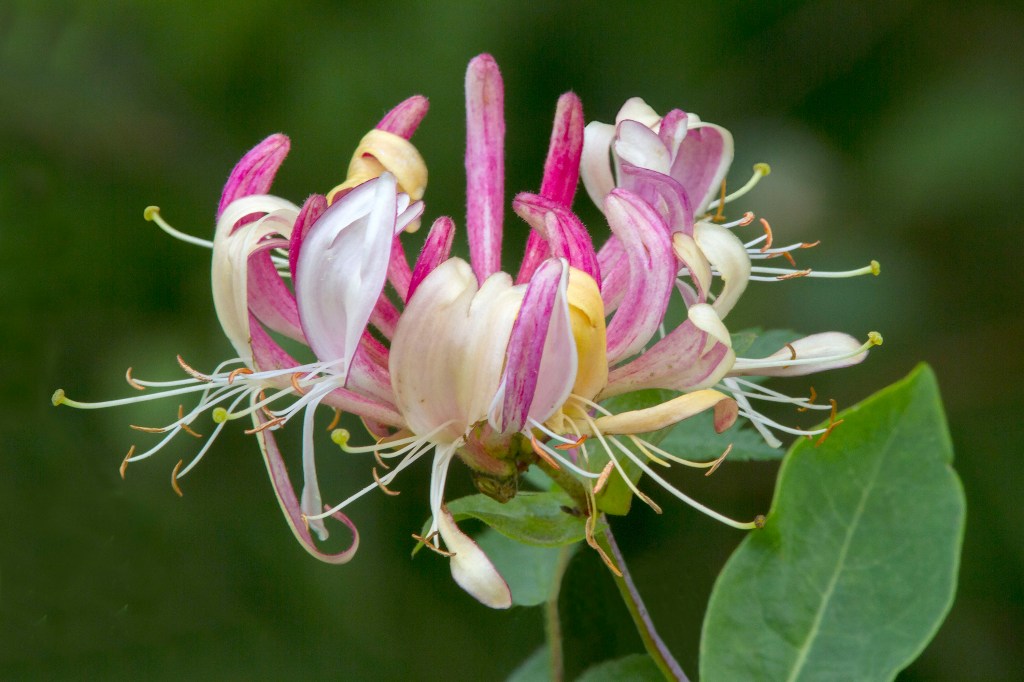
Honeysuckle makes an appearance at a few places.
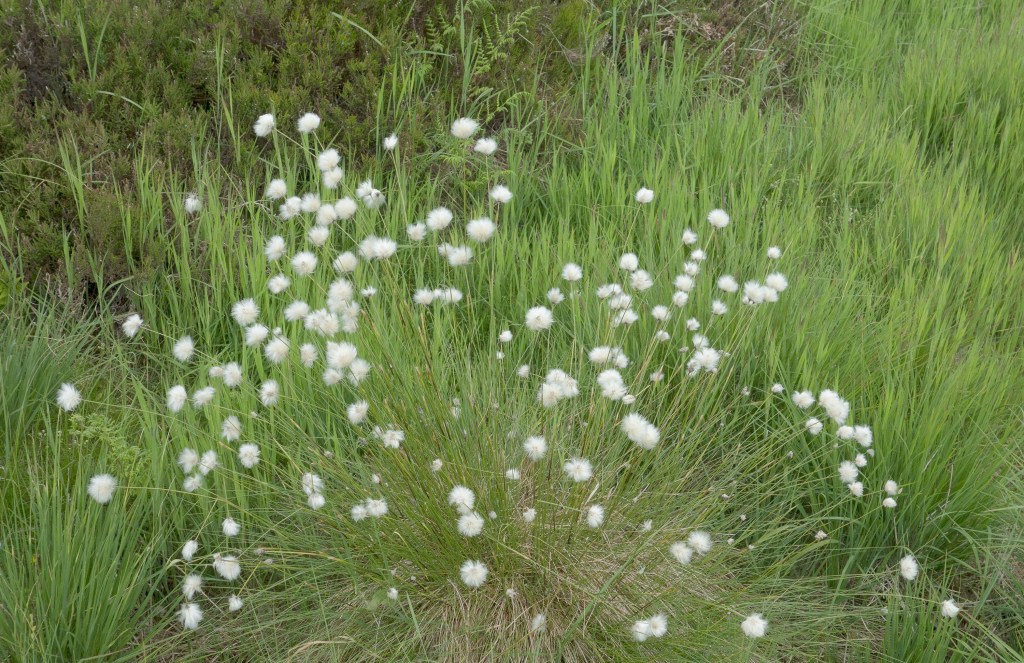
June sees a profusion of flowers, particularly along the paths. Cotton grasses are widespread and now obvious with their white seed heads (especially from the Cotton Grass Loop and views from the Dolphinton Line, with the Pentlands as a backdrop).
Red campion occurs quite widely and there are obvious clumps of russian comfrey near the layby.

Yellow rattle occurs in various places along paths. It is a hemiparasite that taps into the roots of grasses taking in water and minerals, thus reducing their vigour, so helping herbaceous plants to establish. We have scattered seeds in grassy areas to supplement that produced by this annual plant.

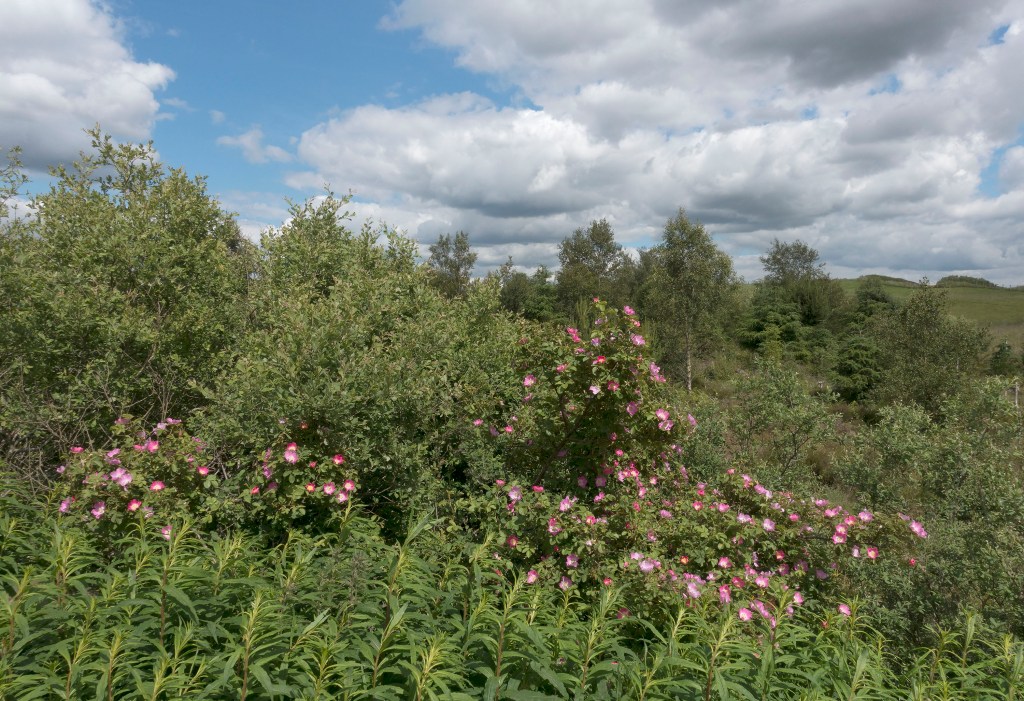
The arrival of midsummer is marked by the appearance of the dog rose in a few places, a notable one not far along the Leadburn Way.
Foxgloves occur quite widely, whilst common bird’s-foot trefoil, germander speedwell, red and white clovers are abundant, commonly forming associations.

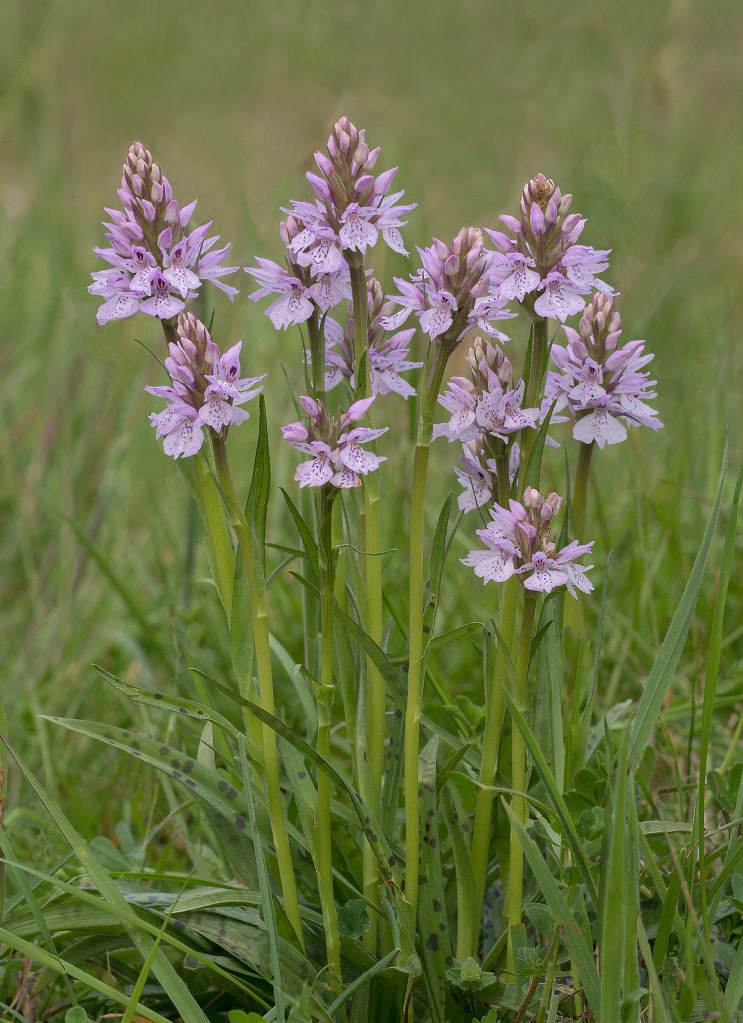
Common and heath spotted orchids are well represented along the paths and grassy areas, but the northern marsh orchid seems to be confined to the Leadburn Way.
In wet areas yellow iris is to be found in a number of places, including an eyecatching group at Easterdeans Crossing.

Two clumps of monkey flower may be viewed from the bench at the Craigburn Pond. Marsh violets are also present in wet areas. This plant, along with the common dog-violet, are an important food source for caterpillars of the small pearl-bordered fritillary.

One plant, first seen as a small group along the Red Elder Path and which has now spread widely in the area, is climbing corydalis.

As June merges into July additional plants put in an appearance, whilst some of the June plants start to seed. Selfheal and hawkbit are prominent low growing herbaceous plants, and a particularly good group of hawkbits grows along the Cross Path on the outside bank of the Pentland Viewpoint.

A small area of common toadflax is present at the north end of Leadburn Way, past where the Dolphinton Way merges with it.

Tufted vetch and meadow vetchling scramble through and up taller vegetation on our main paths.

Two tall thistles, typically unbranched, found in damp areas are the marsh thistle and melancholy thistle. Whilst the marsh is widespread the melancholy is restricted to a small area towards the north end of the Leadburn Way. Both are well visited by butterflies, bumble bees and other insects.

The first of the heaths to appear is the cross-leaved heath, which is important as it supports the large heath butterfly which seems to favour the nectar produced.

Five very visible plants of moderate height are oxeye daisy, sneezewort and lady’s bedstraw, seen at many points along the main paths.
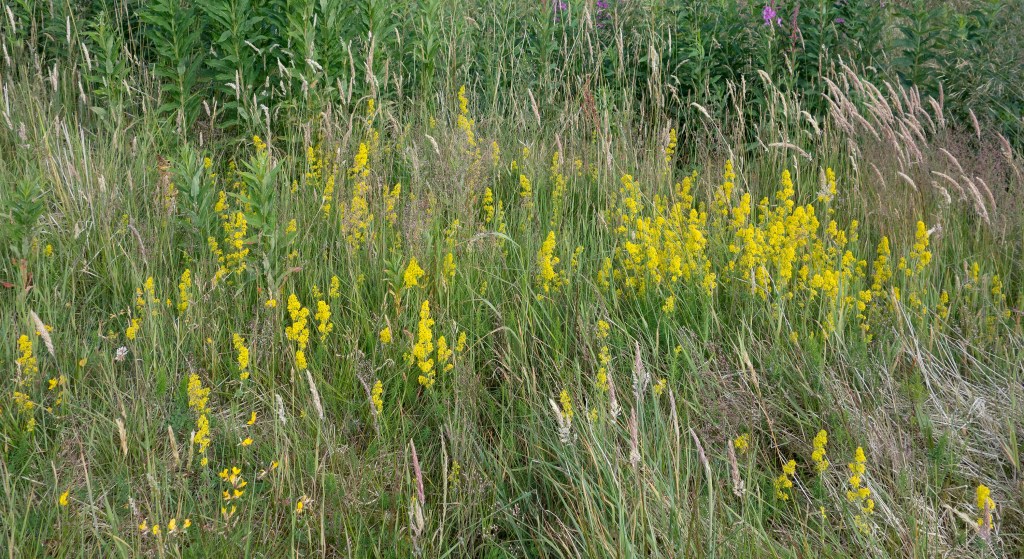
Ragged robin is particularly well distributed between the layby entrance and Easterdeans Crossing where common ragwort is also well established.

The ragwort, though seen elsewhere, at this point plays host to a small colony of cinnabar caterpillars.

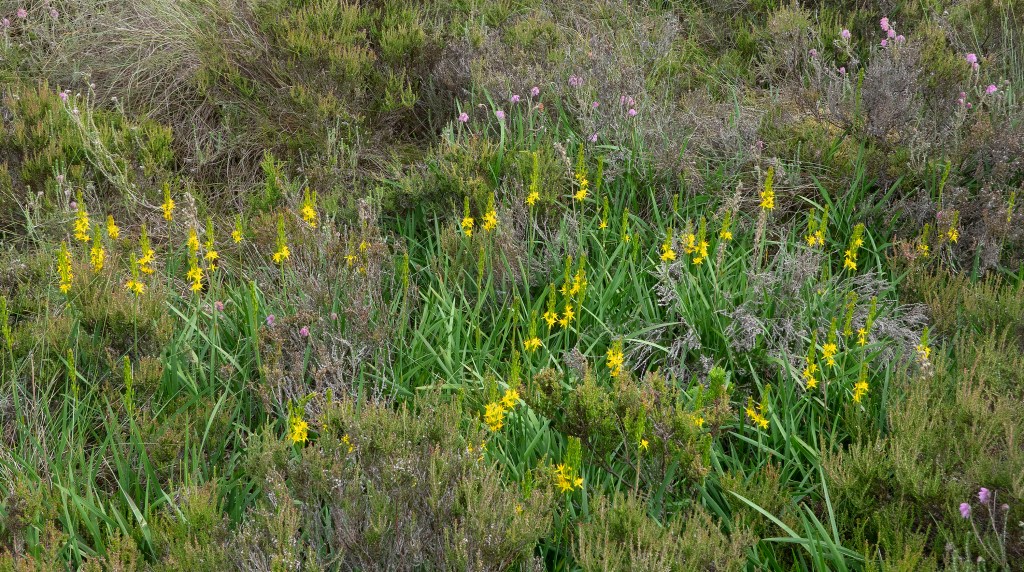
Plants of damp areas include marsh cinquefoil, found alongside the main road. Asphodel Bog supports a spread of bog asphodel and round-leaved sundew displays flowers at this time, though they rarely open.
Angelica is the most robust and best distributed of the umbellifers and one of two tall plants becoming prominent in July.
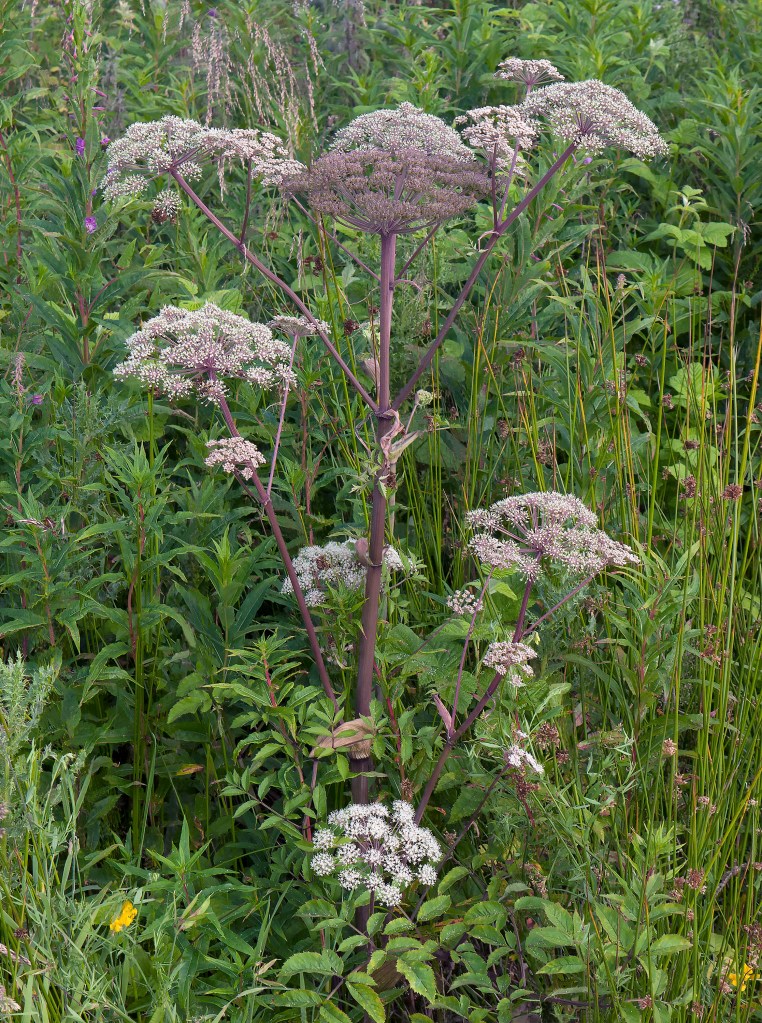
The other is the widely spread rosebay willowherb, adding its distinctive purple colour to the woodland. Some time ago a white rosebay was said to have been seen but not recently, so please do report such a sighting if come across. Both provide a food source to a variety of insects including bumble bees and hoverflies. Bumble bees seemingly ‘skate’ at an amazing speed over the umbellifer heads of angelica.

The name given to the Red Elder Path derives from plants of this species at either end of this path, which are now in flower.

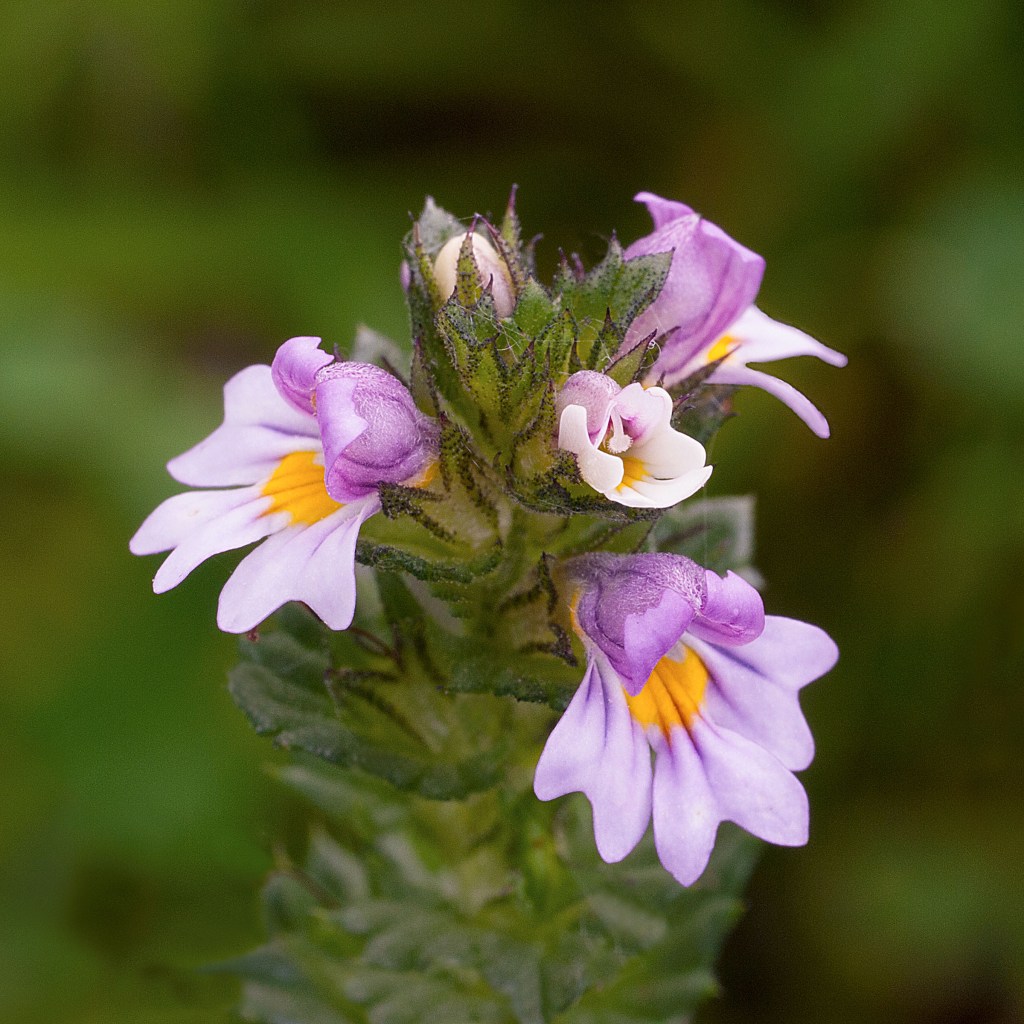
By the time the end of July is reached, with many of the plants seeding and going into senescence, there is a hint of autumn but there are a number of plants that either appear for the first time or perhaps become more noticeable during August. Low growing eyebright, another hemiparasite with its diminutive white to pink flowers, is quite widespread.
Harebell (or Scottish bluebell) is found amongst grasses in a few places and field bindweed, with Its white trumpet shaped flowers scrambles through the vegetation.
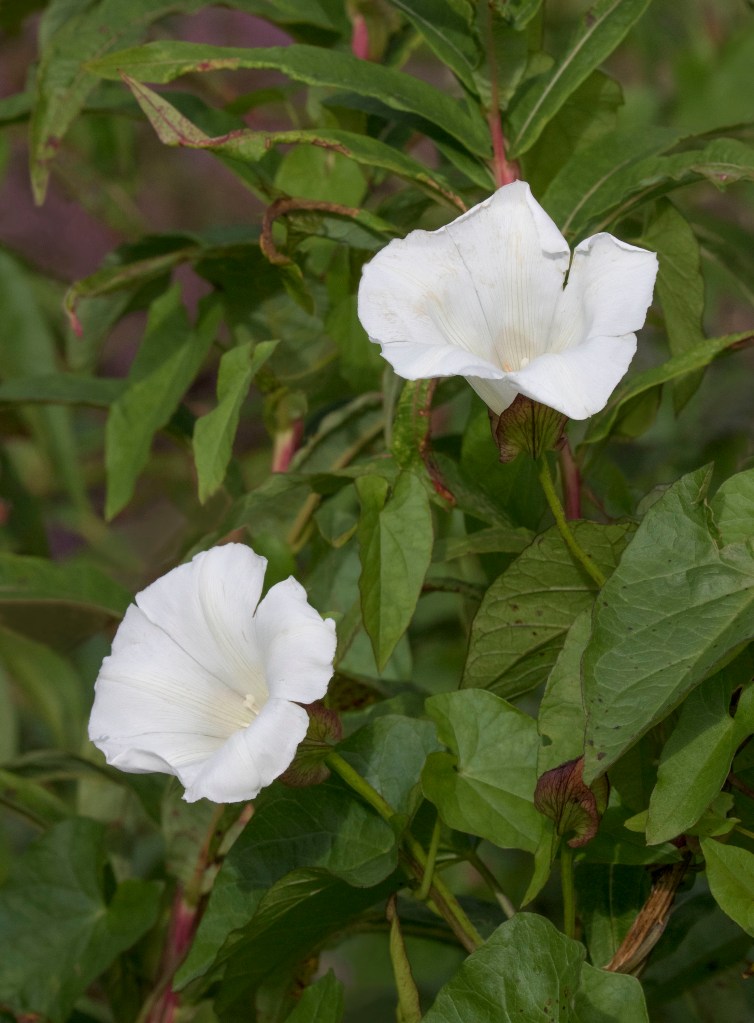
Along Leadburn Way there is a short stretch of yellow loosestrife not far from the start, common knapweed is at its most plentiful, as is devil’s-bit scabious. Both the latter are frequented by late flying insects, particularly bumble bees, illustrating the length of the season in which this group of insects is active.

However, the plant that is widespread and indisputably dominates the woodland in August is heather. A visit to the Pentland Viewpoint is rewarded with a view of the extensive covering of heather on the raised bog. When the bog is lit by sunlight at a low angle the ridges and furrows of the former Forestry Commission deep ploughing can still be made out.

By September and October some plants such as devil’s-bit scabious may still produce a few flowers. However, this is the time of mellow fruitfulness. Thrushes and finches reap the benefits, feeding on berries, hips and seeds, such as those of angelica.

 LeadburnWood